Biogas
Biogas Market Research Report 2034
Biogas Market Segments - by Component (Biogas Plant Equipment, Biogas Upgrading Equipment, Biogas Storage Systems, Biogas Distribution Systems, Biogas Monitoring Systems), Deployment (On-Site, Centralized, Off-Grid, Grid-Connected), Application (Electricity Generation, Heating, Vehicle Fuel, Cooking Gas, Industrial Use), Industry (Agriculture, Municipal, Industrial, Commercial, Residential), and Region (North America, Europe, Asia Pacific, Latin America, Middle East & Africa) - The Market Forecasts are Provided in Terms of Value (USD)
Biogas Market Outlook
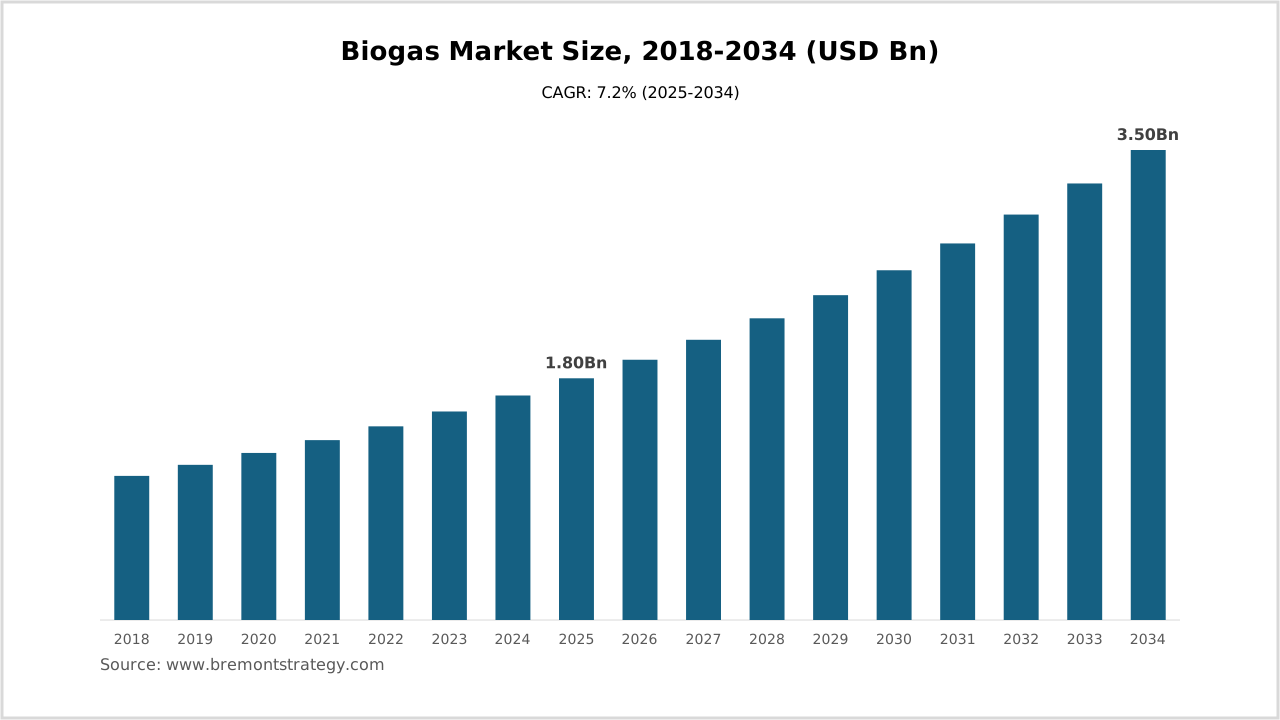
The Biogas market was valued at $1.8 billion in 2025 and is projected to reach $3.5 billion by 2034, growing at a CAGR of 7.2% during the forecast period 2026-2034. The increasing demand for renewable energy sources and growing environmental concerns have been pivotal in fueling the growth of the biogas market. With advancements in biogas production technologies and supportive government policies, the market is set for a significant expansion. The potential for biogas as a versatile energy source capable of generating electricity, providing heating solutions, and being used as vehicle fuel has broadened its application spectrum, driving the market's robust growth trajectory.
Key Takeaways
- The biogas market was valued at $1.8 billion in 2025.
- It is expected to grow to $3.5 billion by 2034.
- The market is anticipated to grow at a CAGR of 7.2% from 2026 to 2034.
- North America and Europe are leading regions in market share.
- Key drivers include environmental concerns and government support.
- Top companies include EnviTec Biogas AG, Wartsila Corporation, and Air Liquide.
- The increasing use of biogas in diverse applications is a growth driver.
- The Asia-Pacific region is expected to show significant growth.
Biogas Market Outlook 2025-2034
The biogas market is poised for substantial growth over the next decade, driven by an increasing focus on renewable energy and sustainable development. The stringent regulations on greenhouse gas emissions have encouraged industries and governments to invest in biogas technologies. This renewable energy source not only helps in reducing carbon footprints but also supports waste management, turning organic waste into valuable energy. As the world looks for cleaner energy solutions, biogas stands out due to its ability to integrate with existing energy systems and provide a consistent energy supply.
The market dynamics are influenced by technological advancements that have made biogas production more efficient and cost-effective. Countries are increasingly adopting biogas as part of their energy mix, fostering investments in infrastructure and technology. The versatility in biogas applications across electricity generation, heating, and as a vehicle fuel further provides an impetus to market growth. Capitalizing on these trends, key players are expanding their market presence by leveraging innovative technologies and strategic partnerships.
Biogas Market Regional Outlook 2025-2034
North America holds a significant share of the biogas market, attributed to the region's focus on renewable energy and sustainable waste management practices. The United States, in particular, has been at the forefront, driving innovations and investments in biogas production technologies. The presence of numerous biogas plants and supportive government policies aimed at reducing carbon emissions are key factors contributing to the region's dominance.
Europe follows closely, with countries like Germany, the UK, and France leading the charge in biogas adoption. The EU's stringent environmental policies and commitment to renewable energy sources have propelled the market. The region's well-established infrastructure and technological advancements in biogas production and utilization hold promise for continued growth.
The Asia-Pacific region is anticipated to experience significant growth, driven by rising energy demands and increasing awareness of sustainable practices. Countries such as China and India are investing heavily in biogas technologies, recognizing their potential in supporting rural energy needs and reducing dependency on fossil fuels.
Key Growth Drivers of the Biogas Market
Environmental Regulations and Policies
Stringent environmental regulations aimed at reducing carbon emissions and promoting renewable energy sources are major drivers for the biogas market. Governments worldwide are implementing policies that support the development and adoption of biogas technologies as part of their climate change mitigation strategies.
Technological Advancements
Advancements in biogas production technologies have significantly enhanced efficiency and cost-effectiveness, making biogas a more viable and competitive energy source. Innovations in anaerobic digestion and biogas upgrading processes have streamlined operations, contributing to market growth.
Growing Demand for Renewable Energy
The increasing global demand for renewable energy sources has propelled the adoption of biogas. As countries strive to reduce their reliance on fossil fuels, biogas offers a sustainable alternative with diverse applications, from electricity generation to vehicle fuel.
Waste Management Solutions
Biogas production offers an effective solution for waste management, converting organic waste into valuable energy. This dual benefit of energy generation and waste reduction is a significant driver for the market, especially in regions with stringent waste disposal regulations.
Diversified Applications
The versatility of biogas in applications such as electricity, heating, vehicle fuel, and industrial use has broadened its appeal across various industries. This multifaceted utility is driving its adoption in numerous sectors, contributing to market growth.
Biogas Market Segment Analysis
By Component
The biogas market, when segmented by component, includes biogas plant equipment, upgrading equipment, storage systems, distribution systems, and monitoring systems. Each component plays a crucial role in the efficient production and utilization of biogas, contributing to the overall market dynamics.
Advancements in component technologies, such as more efficient upgrading equipment and robust storage systems, are enhancing the market's growth prospects. Companies are continuously innovating to improve the performance and reliability of these components, thereby boosting their adoption.
By Deployment
Deployment segments include on-site, centralized, off-grid, and grid-connected systems. The choice of deployment is largely influenced by regional energy infrastructure and specific energy needs, impacting the market's growth trajectory.
Centralized deployment, due to its ability to cater to large-scale biogas production and distribution, is gaining traction, while off-grid deployment is particularly beneficial in remote areas lacking traditional energy infrastructure.
By Application
Biogas applications are diverse, encompassing electricity generation, heating solutions, vehicle fuel, cooking gas, and industrial uses. Each application segment adds unique value to the market, driving its growth through various industry-driven needs.
The electricity generation segment remains a major contributor to the market, driven by the global shift towards clean and renewable energy sources. Meanwhile, the use of biogas as vehicle fuel is gaining popularity, offering a sustainable alternative to traditional fuels.
By Industry
The biogas market caters to several industries, including agriculture, municipal, industrial, commercial, and residential sectors. Each sector presents unique opportunities and challenges, influencing market dynamics differently.
The agricultural sector, in particular, benefits significantly from biogas technologies, utilizing waste materials to produce energy. This not only helps reduce waste but also provides an additional revenue stream for farmers.
By Region
Regional segmentation of the biogas market includes North America, Europe, Asia Pacific, Latin America, and the Middle East & Africa. Each region offers distinct opportunities based on its energy policies, infrastructure, and economic activities.
Europe and North America lead in market share due to their advanced infrastructures and supportive regulatory environments, whereas the Asia Pacific region is poised for rapid growth driven by increasing energy demands and government initiatives.
Biogas Segment Comparison
| Segment | Market Share | Growth Rate | Key Insight |
|---|---|---|---|
| Biogas Plant Equipment | 25% | 6.5% | Integral for production efficiency |
| Biogas Upgrading Equipment | 15% | 7.0% | Enhances biogas purity |
| Electricity Generation | 40% | 8.0% | Major application segment |
| On-Site Deployment | 30% | 7.5% | Favored for direct use |
| Centralized Systems | 35% | 6.8% | Supports large-scale operations |
| Agriculture Industry | 20% | 7.2% | Uses waste for energy |
| North America | 35% | 6.9% | Leading market region |
| Asia Pacific | 25% | 8.5% | Strong growth forecast |
| Vehicle Fuel | 10% | 7.8% | Growing alternative fuel |
| Industrial Use | 20% | 7.0% | High energy demand |
Biogas Market Opportunities and Threats 2025-2034
The biogas market presents numerous opportunities, particularly in the realm of sustainable energy development. With growing global energy demands and the urgent need to address environmental concerns, biogas stands out as a viable solution. Its ability to convert waste into clean energy makes it an attractive option for countries looking to reduce their reliance on fossil fuels. Moreover, advancements in technology and increased investments in infrastructure are likely to enhance the production efficiency and cost-effectiveness of biogas, opening new avenues for growth.
However, the market is not without its challenges. The initial capital investment required for biogas production facilities can be significant, potentially deterring some investors. Furthermore, the complexity of biogas production processes and the need for skilled expertise can pose operational challenges. These factors, coupled with fluctuating energy prices and evolving regulations, can impact market stability and growth prospects.
Despite these challenges, the biogas market is rife with opportunities for innovation and expansion. The increasing integration of biogas into national energy policies and the development of supportive regulatory frameworks are likely to mitigate some of these risks. Additionally, the growing popularity of biogas as a renewable energy source presents opportunities for international collaborations and cross-border investments, potentially driving global market expansion.
Furthermore, the potential for biogas to contribute to a circular economy by utilizing waste products as feedstock aligns with broader sustainability goals. This not only enhances the market's appeal but also provides a compelling narrative for stakeholders and policymakers advocating for cleaner, greener energy solutions. As such, while the biogas market faces certain threats, its inherent opportunities offer significant potential for long-term growth and sustainability.
Biogas Market Competitor Outlook 2025-2034
The biogas market boasts a diverse array of key players, each contributing to the sector's dynamic growth and development. Companies such as EnviTec Biogas AG and Wartsila Corporation are recognized for their innovative approaches to biogas production and technology. Their commitment to research and development has resulted in advanced solutions that enhance the efficiency and effectiveness of biogas utilization, thereby strengthening their market positions.
Air Liquide and Xebec Adsorption Inc. are notable for their focus on biogas upgrading technologies, providing systems that improve the purity and quality of biogas for various applications. These players are actively engaged in collaborations and partnerships, seeking to expand their global footprint and leverage emerging market opportunities. Their strategic initiatives are aimed at capitalizing on the growing demand for clean energy solutions and positioning themselves as leaders in the renewable energy sector.
Meanwhile, companies like Clarke Energy and Schmack Biogas GmbH are focused on expanding their operational capabilities and broadening their service offerings. By investing in new projects and exploring untapped markets, these players are poised to capture a significant share of the evolving biogas market. Their efforts to align with global sustainability goals and adapt to changing regulatory landscapes further underscore their commitment to maintaining a competitive edge in the industry.
Biogas Market Latest Industry Developments
- EnviTec Biogas AG launched a new biogas plant in Europe.
- Wartsila Corporation secured a major contract for biogas upgrading solutions.
- Air Liquide expanded its biogas operations to the Asia-Pacific region.
- Xebec Adsorption Inc. introduced an innovative biogas purification technology.
- Clarke Energy announced a joint venture targeting the North American market.
- Schmack Biogas GmbH unveiled its latest biogas monitoring systems.
- PlanET Biogas Group GmbH established a new facility in Latin America.
- Biofrigas Sweden AB launched a mobile biogas plant solution.
- Gasum Oy opened a new biogas distribution center in Finland.
- Bright Biomethane expanded its production capacity in the Netherlands.
- Viessmann Group introduced advanced biogas storage systems.
- Hitachi Zosen Inova AG partnered with local governments for biogas projects.
- DMT Environmental Technology advanced its biogas upgrading technologies.
- AB Holding SpA announced plans for a biogas infrastructure expansion.
- Future Biogas Limited secured funding for new biogas projects in the UK.
TABLE OF CONTENTS
1. Research Methodology
2. Market Structure
3. Executive Summary
4. Biogas Market Overview
- 4.1 Introduction
- Market Snapshot
- Assumptions, Inclusion & Exclusions
- Technological Advancements & Patent Analysis
- Case Studies
- Market Entry & Launch Strategies
- Macro-Economic Factors Impacting the Market Growth
- 4.2 Biogas Market Dynamics
- Market Drivers
- Market Restraints
- Market Opportunity
- 4.3 Biogas Market - Supply Chain Analysis
- Key Raw Material/Components Provider
- Key Manufacturers
- Key Distributors
- Key Consumers
- 4.4 Key Forces Shaping the Biogas Market
- Bargaining Power of Suppliers
- Bargaining Power of Buyers
- Threat of Substitution
- Threat of New Entrants
- Competitive Rivalry
- 4.1 Introduction
5. Global Biogas Market, By Component
- 5.1 Market Size, Value (USD Mn) & Volume (Units)
- Biogas Plant Equipment
- Biogas Upgrading Equipment
- Biogas Storage Systems
- Biogas Distribution Systems
- Biogas Monitoring Systems
- 5.2 Key Market Trends & Growth Opportunities
- 5.3 Market Share (%) Analysis, 2018-2034
- 5.4 Year-on-Year (YoY) Growth Rate
- 5.5 Market Attractiveness
- 5.6 Global Investment & Trade Risks
- 5.7 Pricing Analysis, 2018-2034
- 5.8 Operating Margin/Profits, 2018-2034
- 5.1 Market Size, Value (USD Mn) & Volume (Units)
6. Global Biogas Market, By Deployment Mode
- 6.1 Market Size, Value (USD Mn) & Volume (Units)
- On-Site
- Centralized
- Off-Grid
- Grid-Connected
- 6.2 Key Market Trends & Growth Opportunities
- 6.3 Market Share (%) Analysis, 2018-2034
- 6.4 Year-on-Year (YoY) Growth Rate
- 6.5 Market Attractiveness
- 6.6 Global Investment & Trade Risks
- 6.7 Pricing Analysis, 2018-2034
- 6.8 Operating Margin/Profits, 2018-2034
- 6.1 Market Size, Value (USD Mn) & Volume (Units)
7. Global Biogas Market, By Application
- 7.1 Market Size, Value (USD Mn) & Volume (Units)
- Electricity Generation
- Heating
- Vehicle Fuel
- Cooking Gas
- Industrial Use
- 7.2 Key Market Trends & Growth Opportunities
- 7.3 Market Share (%) Analysis, 2018-2034
- 7.4 Year-on-Year (YoY) Growth Rate
- 7.5 Market Attractiveness
- 7.6 Global Investment & Trade Risks
- 7.7 Pricing Analysis, 2018-2034
- 7.8 Operating Margin/Profits, 2018-2034
- 7.1 Market Size, Value (USD Mn) & Volume (Units)
8. Global Biogas Market, By Industry Vertical
- 8.1 Market Size, Value (USD Mn) & Volume (Units)
- Agriculture
- Municipal
- Industrial
- Commercial
- Residential
- 8.2 Key Market Trends & Growth Opportunities
- 8.3 Market Share (%) Analysis, 2018-2034
- 8.4 Year-on-Year (YoY) Growth Rate
- 8.5 Market Attractiveness
- 8.6 Global Investment & Trade Risks
- 8.7 Pricing Analysis, 2018-2034
- 8.8 Operating Margin/Profits, 2018-2034
- 8.1 Market Size, Value (USD Mn) & Volume (Units)
9. Global Biogas Market, By Region
- 9.1 Market Size, Value (USD Mn) & Volume (Units)
- North America
- Europe
- Asia Pacific
- Latin America
- Middle East & Africa
- 9.2 Key Market Trends & Growth Opportunities
- 9.3 Market Share (%) Analysis, 2018-2034
- 9.4 Year-on-Year (YoY) Growth Rate
- 9.5 Market Attractiveness
- 9.6 Global Investment & Trade Risks
- 9.7 Pricing Analysis, 2018-2034
- 9.8 Operating Margin/Profits, 2018-2034
- 9.1 Market Size, Value (USD Mn) & Volume (Units)
10. Global Biogas Market, By North America
- 10.1 Market Size, Value (USD Mn) & Volume (Units)
- US
- Canada
- 10.2 Key Market Trends & Growth Opportunities
- 10.3 Market Share (%) Analysis, 2018-2034
- 10.4 Year-on-Year (YoY) Growth Rate
- 10.5 Market Attractiveness
- 10.6 Global Investment & Trade Risks
- 10.7 Pricing Analysis, 2018-2034
- 10.8 Operating Margin/Profits, 2018-2034
- 10.1 Market Size, Value (USD Mn) & Volume (Units)
11. Global Biogas Market, By Europe
- 11.1 Market Size, Value (USD Mn) & Volume (Units)
- Germany
- France
- UK
- Spain
- Italy
- Switzerland
- Russia
- Poland
- Rest of Europe
- 11.2 Key Market Trends & Growth Opportunities
- 11.3 Market Share (%) Analysis, 2018-2034
- 11.4 Year-on-Year (YoY) Growth Rate
- 11.5 Market Attractiveness
- 11.6 Global Investment & Trade Risks
- 11.7 Pricing Analysis, 2018-2034
- 11.8 Operating Margin/Profits, 2018-2034
- 11.1 Market Size, Value (USD Mn) & Volume (Units)
12. Global Biogas Market, By Asia Pacific
- 12.1 Market Size, Value (USD Mn) & Volume (Units)
- China
- Japan
- South Korea
- India
- Australia
- South East Asia
- Rest of APAC
- 12.2 Key Market Trends & Growth Opportunities
- 12.3 Market Share (%) Analysis, 2018-2034
- 12.4 Year-on-Year (YoY) Growth Rate
- 12.5 Market Attractiveness
- 12.6 Global Investment & Trade Risks
- 12.7 Pricing Analysis, 2018-2034
- 12.8 Operating Margin/Profits, 2018-2034
- 12.1 Market Size, Value (USD Mn) & Volume (Units)
13. Global Biogas Market, By Latin America
- 13.1 Market Size, Value (USD Mn) & Volume (Units)
- Brazil
- Mexico
- Argentina
- Rest of LATAM
- 13.2 Key Market Trends & Growth Opportunities
- 13.3 Market Share (%) Analysis, 2018-2034
- 13.4 Year-on-Year (YoY) Growth Rate
- 13.5 Market Attractiveness
- 13.6 Global Investment & Trade Risks
- 13.7 Pricing Analysis, 2018-2034
- 13.8 Operating Margin/Profits, 2018-2034
- 13.1 Market Size, Value (USD Mn) & Volume (Units)
14. Global Biogas Market, By Middle East & Africa
- 14.1 Market Size, Value (USD Mn) & Volume (Units)
- Saudi Arabia
- UAE
- South Africa
- Rest of MEA
- 14.2 Key Market Trends & Growth Opportunities
- 14.3 Market Share (%) Analysis, 2018-2034
- 14.4 Year-on-Year (YoY) Growth Rate
- 14.5 Market Attractiveness
- 14.6 Global Investment & Trade Risks
- 14.7 Pricing Analysis, 2018-2034
- 14.8 Operating Margin/Profits, 2018-2034
- 14.1 Market Size, Value (USD Mn) & Volume (Units)
15. Competitive Analysis
- 15.1 Competition Landscape, Key Players
- Global Market Share (%) Analysis of Key Players in Biogas, in Value (USD Mn) & Volume (Units)
- Company Overview
- Company Financials
- News & Developments
- Strategic Initiatives
- 15.2 Company Profiles
- EnviTec Biogas AG
- Wartsila Corporation
- Air Liquide
- Xebec Adsorption Inc.
- Clarke Energy
- Schmack Biogas GmbH
- PlanET Biogas Group GmbH
- Biofrigas Sweden AB
- Gasum Oy
- Bright Biomethane
- Viessmann Group
- Hitachi Zosen Inova AG
- DMT Environmental Technology
- AB Holding SpA
- Future Biogas Limited
- BTS Biogas Srl/GmbH
- SP Renewable Energy Sources Pvt. Ltd.
- Ameresco, Inc.
- ENGIE SA
- TotalEnergies SE
- 15.1 Competition Landscape, Key Players
METHODOLOGY
To provide you with a comprehensive understanding of how we quantify your market opportunity, we utilize a multi-phased methodology designed to minimize risk and maximize strategic clarity. We begin the process by establishing a clear conceptual framework, often referred to as the TAM-SAM-SOM model. By starting with the Total Addressable Market, we look at the absolute global demand for your category. We then refine this into the Serviceable Addressable Market to account for your specific geographic and technological reach, and finally, we pinpoint the Serviceable Obtainable Market. This ensures that the final figures we present are not just theoretical "vanity metrics," but represent a realistic, capture-able revenue target for your business.
Our data collection process relies on a rigorous principle called triangulation, where we cross-reference multiple independent data streams to ensure accuracy. We initiate this with deep-dive secondary research, synthesizing high-value intelligence from audited financial filings, government trade databases, and specialized industry journals. This "desk research" phase provides a macro-economic baseline and identifies historical growth trajectories. However, because secondary data can sometimes lag behind real-time shifts, we supplement this with targeted primary research. This involves direct engagement with Key Opinion Leaders (KOLs) and structured quantitative surveys to capture the current pulse of the market and emerging buyer intent.
To ensure the integrity of our estimates, we employ a dual-modeling approach, calculating the market size from both the "Top-Down" and "Bottom-Up." The Top-Down analysis provides a valuable sanity check against broader economic trends, but we place the most weight on our Bottom-Up modeling. By taking granular data, such as the average transaction value and the actual number of potential customer touchpoints, and scaling them upward, we build a highly defensible model grounded in operational reality. This dual-verification method allows us to identify any discrepancies early, ensuring that the resulting data is robust enough to withstand the scrutiny of stakeholders or investors.
Finally, we recognize that a static market size figure is only a snapshot in time. To provide you with a roadmap for the future, we integrate trend analysis and Compound Annual Growth Rate (CAGR) forecasting into our final reporting. We analyze the underlying drivers, such as regulatory shifts, technological disruptions, or changing consumer behaviors, to predict how the market will evolve over the next three to five years. This ongoing tracking mechanism transforms a simple number into a dynamic strategic tool, allowing you to monitor your market share in real-time and pivot your resources as new opportunities emerge.