Lancing Device
Lancing Device Market Research Report 2036
Lancing Device Market Segments - by Component (Lancets, Lancing Devices, Accessories, Kits, Replacement Parts), Deployment (Manual Lancing Devices, Automatic Lancing Devices, Adjustable Lancing Devices, Safety Lancing Devices, Reusable Lancing Devices), Application (Diabetes Management, Capillary Blood Sampling, Hemoglobin Testing, Allergy Testing, Cholesterol Testing), Industry (Healthcare, Homecare, Diagnostics Laboratories, Research Institutions, Pharmaceutical Companies), and Region (North America, Europe, Asia Pacific, Latin America, Middle East & Africa) - The Market Forecasts are Provided in Terms of Value (USD)
Lancing Device Market Outlook
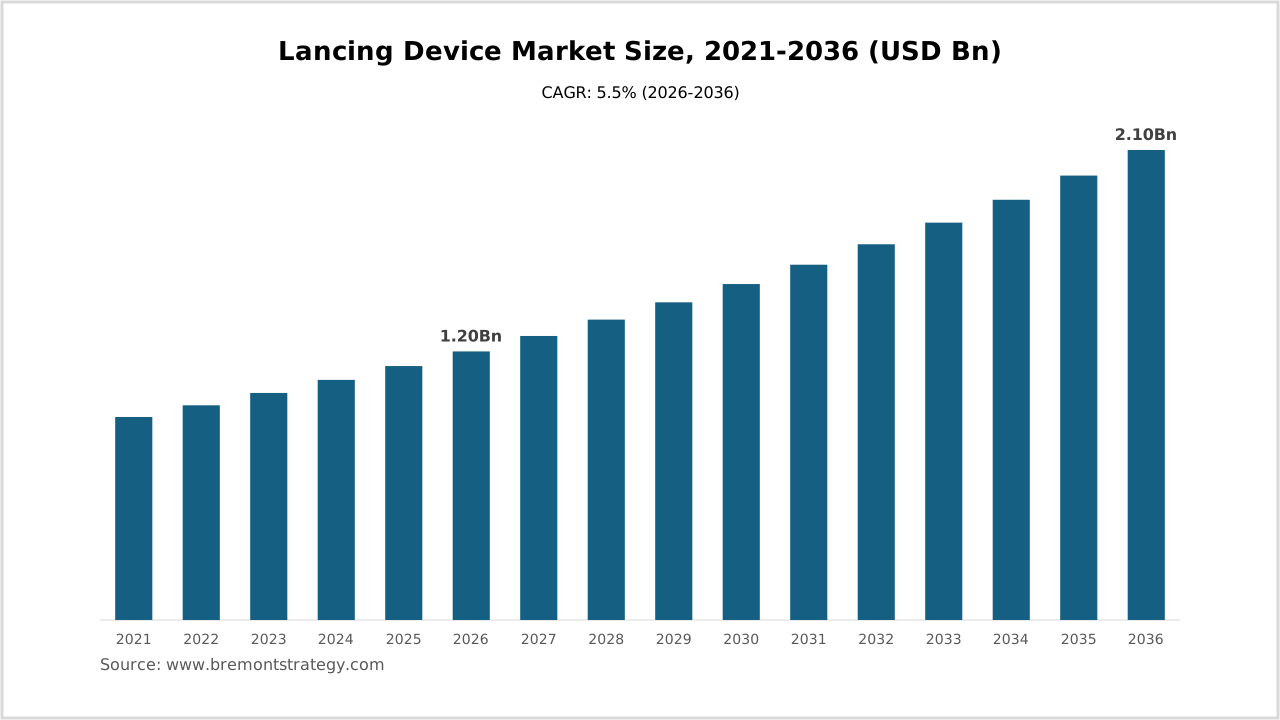
The Lancing Device market was valued at $1.2 Billion in 2026 and is projected to reach $2.1 Billion by 2036, growing at a CAGR of 5.5% during the forecast period 2026-2036. This growth is driven by the increasing prevalence of diabetes and the rising demand for home-based diagnostic tools.
Lancing devices are medical instruments used to obtain blood samples for glucose monitoring. They are distinct due to their precision and minimal pain compared to conventional methods. These devices typically consist of a lancet housed within a mechanism that allows for controlled penetration.
The demand for lancing devices is primarily driven by the growing diabetic population and the need for regular blood glucose monitoring. Additionally, advancements in healthcare infrastructure and increased awareness about diabetes management contribute to market growth.
Technological advancements in lancing devices are focused on improving ease of use and minimizing discomfort. Research and development efforts are directed towards creating more ergonomic designs and enhancing the safety features of these devices.
Competitive dynamics in the lancing device market are influenced by factors such as price, technical performance, and distribution networks. Companies compete by offering innovative features and ensuring widespread availability through robust distribution channels.
Lancing Device Market Key Takeaways
- The Lancing Device market is expected to grow from $1.2 Billion in 2026 to $2.1 Billion by 2036, at a CAGR of 5.5%.
- By component, the Lancets segment holds the largest market share, driven by its essential role in blood sampling.
- North America leads the market with a significant share due to advanced healthcare infrastructure and high diabetes prevalence.
- The demand for automatic lancing devices is growing rapidly due to their ease of use and enhanced safety features.
- Increasing awareness about diabetes management is a key driver of market growth.
Lancing Device Market Key Drivers
| Drivers | Impact |
|---|---|
| Diabetes Prevalence | Rising diabetes cases globally boost demand for lancing devices. |
| Technological Advancements | Innovations enhance device efficiency and user experience. |
| Homecare Adoption | Increasing preference for home-based diagnostics drives market growth. |
| Healthcare Infrastructure | Improved healthcare facilities support market expansion. |
| Awareness Programs | Educational initiatives increase consumer awareness and adoption. |
Diabetes Prevalence
The global increase in diabetes prevalence is a significant driver for the lancing device market. As more individuals are diagnosed with diabetes, the need for regular blood glucose monitoring becomes critical, thereby increasing the demand for lancing devices. This trend is particularly pronounced in regions with high obesity rates and aging populations, where diabetes is more prevalent.
Technological Advancements
Technological advancements in lancing devices focus on improving user comfort and device accuracy. Innovations such as automatic lancing mechanisms and adjustable penetration depths enhance user experience by reducing pain and increasing precision. These advancements make lancing devices more appealing to consumers, thereby driving market growth.
Homecare Adoption
The shift towards home-based healthcare solutions is propelling the demand for lancing devices. As patients seek convenience and cost-effective ways to manage their health, homecare solutions like lancing devices become increasingly popular. This trend is supported by advancements in telemedicine and remote monitoring technologies.
Healthcare Infrastructure
Developments in healthcare infrastructure, particularly in emerging economies, are facilitating the adoption of lancing devices. Improved access to healthcare services and facilities enables more individuals to utilize these devices for regular health monitoring, contributing to market growth.
Awareness Programs
Awareness programs and educational initiatives play a crucial role in increasing the adoption of lancing devices. By educating the public about the importance of regular blood glucose monitoring and the benefits of using lancing devices, these programs drive consumer demand and support market expansion.
Lancing Device Market Opportunities and Challenges
| Opportunity | Challenges |
|---|---|
| Technological Integration | High Competition |
| Emerging Markets | Regulatory Hurdles |
| Product Diversification | Price Sensitivity |
The lancing device market presents several opportunities, particularly in technological integration and emerging markets. Integrating advanced technologies such as IoT and AI into lancing devices can enhance their functionality and appeal. Emerging markets offer significant growth potential due to increasing healthcare investments and a rising diabetic population. Additionally, product diversification can cater to varied consumer needs, expanding market reach.
Despite these opportunities, the market faces challenges such as high competition and regulatory hurdles. The presence of numerous players intensifies competition, making it difficult for new entrants to establish a foothold. Regulatory requirements can delay product launches and increase costs. Furthermore, price sensitivity among consumers poses a challenge, as buyers often prioritize cost over advanced features, impacting profit margins.
Lancing Device Market Report Scope
| Attributes | Details |
|---|---|
| Report Title | Lancing Device Market Research Report 2036 |
| By component | Lancets, Lancing Devices, Accessories, Kits, Replacement Parts |
| By deployment | Manual Lancing Devices, Automatic Lancing Devices, Adjustable Lancing Devices, Safety Lancing Devices, Reusable Lancing Devices |
| By application | Diabetes Management, Capillary Blood Sampling, Hemoglobin Testing, Allergy Testing, Cholesterol Testing |
| By industry | Healthcare, Homecare, Diagnostics Laboratories, Research Institutions, Pharmaceutical Companies |
| By region | North America, Europe, Asia Pacific, Latin America, Middle East & Africa |
| Countries Covered | North America (United States, Canada), Europe (Germany, France, UK, Italy, Spain, Rest of Europe), Asia Pacific (China, Japan, India, Australia, South Korea, Rest of Asia Pacific), Latin America (Brazil, Mexico, Argentina, Rest of Latin America), Middle East & Africa (GCC, South Africa, Rest of MEA) |
| Base Year | 2026 |
| Historic Data | 2021-2025 |
| Forecast Period | 2026-2036 |
| Number of Pages | 280 |
| Number of Tables & Figures | 350 |
| Customization Available | Yes, the report can be customized as per your need. |
Lancing Device Market Segment Analysis
The Lancing Device market is segmented into various categories, including component, deployment, application, industry, and region. Each segment offers unique insights into market dynamics and growth opportunities.
By component Analysis
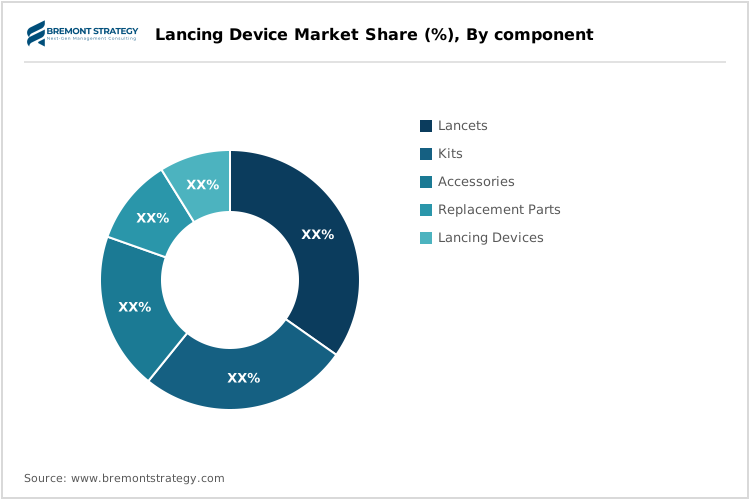
| Segment | Market Share | Growth Rate | Key Insight |
|---|---|---|---|
| Lancets | 35% | 5.2% | Essential for blood sampling |
| Lancing Devices | 25% | 5.8% | Growing preference for automated devices |
| Accessories | 15% | 4.9% | Complementary to devices |
| Kits | 15% | 5.0% | Convenience for consumers |
| Replacement Parts | 10% | 4.5% | Regular need for maintenance |
The Lancets segment dominates the market due to its critical role in blood sampling for glucose monitoring. Lancets are indispensable in diabetes management, driving their high market share. The Lancing Devices segment is also significant, with an increasing shift towards automated devices that offer ease of use and enhanced safety.
Accessories and Kits are growing steadily, as they provide complementary benefits and convenience to users. Kits, in particular, appeal to consumers seeking an all-in-one solution for their blood sampling needs. Replacement Parts, while smaller in market share, are essential for maintaining device functionality.
By deployment Analysis
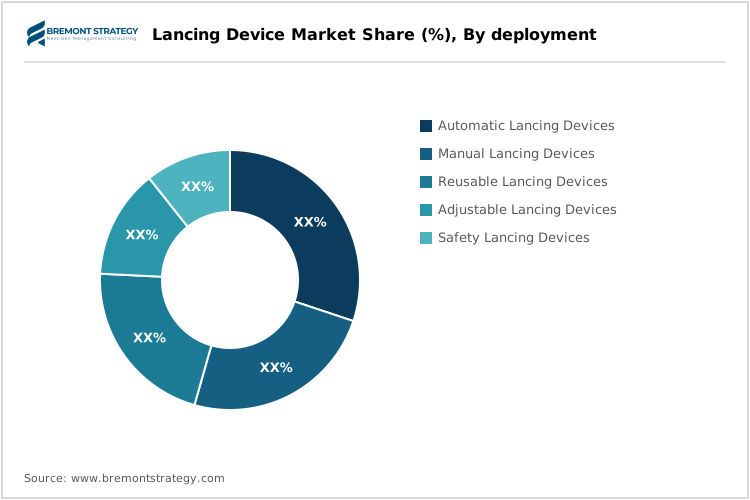
| Segment | Market Share | Growth Rate | Key Insight |
|---|---|---|---|
| Manual Lancing Devices | 20% | 4.0% | Cost-effective option |
| Automatic Lancing Devices | 30% | 6.0% | Preferred for ease of use |
| Adjustable Lancing Devices | 20% | 5.5% | Customizable depth settings |
| Safety Lancing Devices | 15% | 5.8% | Enhanced safety features |
| Reusable Lancing Devices | 15% | 5.0% | Eco-friendly choice |
Automatic Lancing Devices lead the deployment segment due to their user-friendly design and minimal discomfort. They are particularly popular among consumers seeking convenience and efficiency in blood sampling. Adjustable Lancing Devices also hold a significant share, offering customizable depth settings for personalized use.
Safety Lancing Devices are gaining traction due to their enhanced safety features, which reduce the risk of accidental needle sticks. Reusable Lancing Devices appeal to environmentally conscious consumers, providing a sustainable alternative to disposable options.
By application Analysis
| Segment | Market Share | Growth Rate | Key Insight |
|---|---|---|---|
| Diabetes Management | 50% | 6.0% | Primary application area |
| Capillary Blood Sampling | 20% | 5.5% | Essential for various tests |
| Hemoglobin Testing | 10% | 5.0% | Growing health awareness |
| Allergy Testing | 10% | 4.8% | Increasing allergy cases |
| Cholesterol Testing | 10% | 5.2% | Rising cardiovascular concerns |
Diabetes Management is the largest application segment, driven by the necessity of regular blood glucose monitoring for diabetic patients. This application accounts for half of the market share, reflecting its critical role in the lancing device market.
Capillary Blood Sampling is another significant application, used for various diagnostic tests beyond diabetes. Hemoglobin Testing is gaining importance due to increased health awareness, while Allergy Testing and Cholesterol Testing are driven by rising allergy cases and cardiovascular health concerns, respectively.
By industry Analysis
| Segment | Market Share | Growth Rate | Key Insight |
|---|---|---|---|
| Healthcare | 40% | 5.5% | Institutional demand |
| Homecare | 30% | 6.0% | Rising home diagnostics |
| Diagnostics Laboratories | 15% | 5.2% | Essential testing services |
| Research Institutions | 10% | 4.8% | Research and development |
| Pharmaceutical Companies | 5% | 4.5% | Product development |
The Healthcare industry is the largest consumer of lancing devices, driven by institutional demand from hospitals and clinics. Homecare is rapidly growing, as more consumers adopt home-based diagnostic solutions for convenience and cost savings.
Diagnostics Laboratories rely on lancing devices for essential testing services, while Research Institutions use them for various research and development activities. Pharmaceutical Companies also utilize these devices in product development and clinical trials.
By region Analysis
| Segment | Market Share | Growth Rate | Key Insight |
|---|---|---|---|
| North America | 35% | 5.0% | Advanced healthcare infrastructure |
| Europe | 25% | 5.3% | High diabetes prevalence |
| Asia Pacific | 20% | 6.5% | Emerging healthcare markets |
| Latin America | 10% | 5.2% | Growing healthcare investments |
| Middle East & Africa | 10% | 5.0% | Increasing healthcare awareness |
North America leads the regional market due to its advanced healthcare infrastructure and high prevalence of diabetes. The region's well-established healthcare system supports the widespread adoption of lancing devices.
Europe follows closely, with a significant market share driven by high diabetes prevalence and strong healthcare policies. The region's focus on preventive healthcare further boosts the demand for lancing devices.
Asia Pacific is the fastest-growing region, with emerging healthcare markets and increasing investments in healthcare infrastructure. The rising diabetic population in countries like China and India contributes to this growth.
Latin America is experiencing growth due to increased healthcare investments and government initiatives to improve healthcare access. The region's focus on expanding healthcare services supports market expansion.
The Middle East & Africa region is witnessing growth due to increasing healthcare awareness and efforts to improve healthcare infrastructure. The region's focus on addressing chronic diseases like diabetes drives demand for lancing devices.
Lancing Device Market Regional Outlook
| Regional Outlook | |
|---|---|
| Largest Market | North America |
| Fastest Growing Market | Asia Pacific |
| Emerging Countries | China, India, Brazil |
| Future Outlook | Continued growth driven by technological advancements and increased healthcare investment. |
North America remains the largest market for lancing devices, supported by advanced healthcare infrastructure and a high prevalence of diabetes. The region's focus on preventive healthcare and regular monitoring drives demand for these devices.
Europe holds a significant market share, with a strong emphasis on healthcare policies and preventive measures. The region's high diabetes prevalence and focus on early diagnosis contribute to the steady demand for lancing devices.
Asia Pacific is the fastest-growing market, driven by emerging healthcare markets and increasing investments in healthcare infrastructure. The region's large diabetic population and rising awareness about diabetes management fuel market growth.
Latin America is witnessing growth due to increased healthcare investments and government initiatives to improve healthcare access. The region's focus on expanding healthcare services and addressing chronic diseases supports market expansion.
The Middle East & Africa region is experiencing growth as healthcare awareness increases and efforts to improve healthcare infrastructure continue. The region's focus on addressing chronic diseases like diabetes drives demand for lancing devices.
Lancing Device Market Competitor Outlook
| Competitor Outlook | |
|---|---|
| Market Leader |
|
| Key Players |
|
| Key Competitive Factors |
|
Lancing Device Pricing Analysis
Pricing in the lancing device market is influenced by various factors, including product formulation, specification, scale of production, and regional market dynamics. Devices with advanced features or those manufactured by leading brands tend to be priced higher. Regional variations in pricing are also evident, with developed markets often commanding higher prices due to advanced healthcare infrastructure and higher disposable incomes.
Price sensitivity is a significant consideration in the lancing device market, with consumers often weighing cost against perceived value. While some buyers prioritize affordability, others are willing to pay a premium for devices that offer superior performance, comfort, and safety. This dichotomy influences manufacturers to balance cost-effective production with the inclusion of desirable features to cater to diverse consumer preferences.
Lancing Device Consumer Buying Behaviour / Preference Analysis
Key Purchase Criteria
| Buying Factor | Relative Importance | Reason |
|---|---|---|
| Performance | Very High | Accurate results |
| Durability/Reliability | High | Long-term use |
| Certification/Compliance | Medium-High | Regulatory standards |
| Total Cost | Medium | Budget constraints |
| Differentiating Capability | High | Unique features |
The typical buyers of lancing devices include healthcare professionals, diabetic patients, and caregivers responsible for managing diabetes. These buyers prioritize performance and reliability, seeking devices that provide accurate and consistent results. Healthcare professionals often influence purchase decisions, recommending devices based on clinical efficacy and patient feedback.
Consumer buying behavior in the lancing device market is influenced by factors such as performance, durability, and cost. Buyers seek devices that offer a balance between affordability and advanced features, with a strong emphasis on accuracy and ease of use. Brand reputation and compliance with regulatory standards also play a crucial role in shaping purchase decisions.
TABLE OF CONTENTS
1. Research Methodology
2. Market Structure
3. Executive Summary
4. Lancing Device Market Overview
- 4.1 Introduction
- Market Snapshot
- Assumptions, Inclusion & Exclusions
- Technological Advancements & Patent Analysis
- Case Studies
- Market Entry & Launch Strategies
- Macro-Economic Factors Impacting the Market Growth
- 4.2 Lancing Device Market Dynamics
- Market Drivers
- Market Restraints
- Market Opportunity
- 4.3 Lancing Device Market - Supply Chain Analysis
- Key Raw Material/Components Provider
- Key Manufacturers
- Key Distributors
- Key Consumers
- 4.4 Key Forces Shaping the Lancing Device Market
- Bargaining Power of Suppliers
- Bargaining Power of Buyers
- Threat of Substitution
- Threat of New Entrants
- Competitive Rivalry
- 4.1 Introduction
5. Global Lancing Device Market, By Component
- 5.1 Market Size, Value (USD Mn) & Volume (Units)
- Lancets
- Lancing Devices
- Accessories
- Kits
- Replacement Parts
- 5.2 Key Market Trends & Growth Opportunities
- 5.3 Market Share (%) Analysis, 2021-2036
- 5.4 Year-on-Year (YoY) Growth Rate
- 5.5 Market Attractiveness
- 5.6 Global Investment & Trade Risks
- 5.7 Pricing Analysis, 2021-2036
- 5.8 Operating Margin/Profits, 2021-2036
- 5.1 Market Size, Value (USD Mn) & Volume (Units)
6. Global Lancing Device Market, By Deployment Mode
- 6.1 Market Size, Value (USD Mn) & Volume (Units)
- Manual Lancing Devices
- Automatic Lancing Devices
- Adjustable Lancing Devices
- Safety Lancing Devices
- Reusable Lancing Devices
- 6.2 Key Market Trends & Growth Opportunities
- 6.3 Market Share (%) Analysis, 2021-2036
- 6.4 Year-on-Year (YoY) Growth Rate
- 6.5 Market Attractiveness
- 6.6 Global Investment & Trade Risks
- 6.7 Pricing Analysis, 2021-2036
- 6.8 Operating Margin/Profits, 2021-2036
- 6.1 Market Size, Value (USD Mn) & Volume (Units)
7. Global Lancing Device Market, By Application
- 7.1 Market Size, Value (USD Mn) & Volume (Units)
- Diabetes Management
- Capillary Blood Sampling
- Hemoglobin Testing
- Allergy Testing
- Cholesterol Testing
- 7.2 Key Market Trends & Growth Opportunities
- 7.3 Market Share (%) Analysis, 2021-2036
- 7.4 Year-on-Year (YoY) Growth Rate
- 7.5 Market Attractiveness
- 7.6 Global Investment & Trade Risks
- 7.7 Pricing Analysis, 2021-2036
- 7.8 Operating Margin/Profits, 2021-2036
- 7.1 Market Size, Value (USD Mn) & Volume (Units)
8. Global Lancing Device Market, By Industry Vertical
- 8.1 Market Size, Value (USD Mn) & Volume (Units)
- Healthcare
- Homecare
- Diagnostics Laboratories
- Research Institutions
- Pharmaceutical Companies
- 8.2 Key Market Trends & Growth Opportunities
- 8.3 Market Share (%) Analysis, 2021-2036
- 8.4 Year-on-Year (YoY) Growth Rate
- 8.5 Market Attractiveness
- 8.6 Global Investment & Trade Risks
- 8.7 Pricing Analysis, 2021-2036
- 8.8 Operating Margin/Profits, 2021-2036
- 8.1 Market Size, Value (USD Mn) & Volume (Units)
9. Global Lancing Device Market, By Region
- 9.1 Market Size, Value (USD Mn) & Volume (Units)
- North America
- Europe
- Asia Pacific
- Latin America
- Middle East & Africa
- 9.2 Key Market Trends & Growth Opportunities
- 9.3 Market Share (%) Analysis, 2021-2036
- 9.4 Year-on-Year (YoY) Growth Rate
- 9.5 Market Attractiveness
- 9.6 Global Investment & Trade Risks
- 9.7 Pricing Analysis, 2021-2036
- 9.8 Operating Margin/Profits, 2021-2036
- 9.1 Market Size, Value (USD Mn) & Volume (Units)
10. Global Lancing Device Market, By North America
- 10.1 Market Size, Value (USD Mn) & Volume (Units)
- US
- Canada
- 10.2 Key Market Trends & Growth Opportunities
- 10.3 Market Share (%) Analysis, 2021-2036
- 10.4 Year-on-Year (YoY) Growth Rate
- 10.5 Market Attractiveness
- 10.6 Global Investment & Trade Risks
- 10.7 Pricing Analysis, 2021-2036
- 10.8 Operating Margin/Profits, 2021-2036
- 10.1 Market Size, Value (USD Mn) & Volume (Units)
11. Global Lancing Device Market, By Europe
- 11.1 Market Size, Value (USD Mn) & Volume (Units)
- Germany
- France
- UK
- Spain
- Italy
- Switzerland
- Russia
- Poland
- Rest of Europe
- 11.2 Key Market Trends & Growth Opportunities
- 11.3 Market Share (%) Analysis, 2021-2036
- 11.4 Year-on-Year (YoY) Growth Rate
- 11.5 Market Attractiveness
- 11.6 Global Investment & Trade Risks
- 11.7 Pricing Analysis, 2021-2036
- 11.8 Operating Margin/Profits, 2021-2036
- 11.1 Market Size, Value (USD Mn) & Volume (Units)
12. Global Lancing Device Market, By Asia Pacific
- 12.1 Market Size, Value (USD Mn) & Volume (Units)
- China
- Japan
- South Korea
- India
- Australia
- South East Asia
- Rest of APAC
- 12.2 Key Market Trends & Growth Opportunities
- 12.3 Market Share (%) Analysis, 2021-2036
- 12.4 Year-on-Year (YoY) Growth Rate
- 12.5 Market Attractiveness
- 12.6 Global Investment & Trade Risks
- 12.7 Pricing Analysis, 2021-2036
- 12.8 Operating Margin/Profits, 2021-2036
- 12.1 Market Size, Value (USD Mn) & Volume (Units)
13. Global Lancing Device Market, By Latin America
- 13.1 Market Size, Value (USD Mn) & Volume (Units)
- Brazil
- Mexico
- Argentina
- Rest of LATAM
- 13.2 Key Market Trends & Growth Opportunities
- 13.3 Market Share (%) Analysis, 2021-2036
- 13.4 Year-on-Year (YoY) Growth Rate
- 13.5 Market Attractiveness
- 13.6 Global Investment & Trade Risks
- 13.7 Pricing Analysis, 2021-2036
- 13.8 Operating Margin/Profits, 2021-2036
- 13.1 Market Size, Value (USD Mn) & Volume (Units)
14. Global Lancing Device Market, By Middle East & Africa
- 14.1 Market Size, Value (USD Mn) & Volume (Units)
- Saudi Arabia
- UAE
- South Africa
- Rest of MEA
- 14.2 Key Market Trends & Growth Opportunities
- 14.3 Market Share (%) Analysis, 2021-2036
- 14.4 Year-on-Year (YoY) Growth Rate
- 14.5 Market Attractiveness
- 14.6 Global Investment & Trade Risks
- 14.7 Pricing Analysis, 2021-2036
- 14.8 Operating Margin/Profits, 2021-2036
- 14.1 Market Size, Value (USD Mn) & Volume (Units)
15. Competitive Analysis
- 15.1 Competition Landscape, Key Players
- Global Market Share (%) Analysis of Key Players in Lancing Device, in Value (USD Mn) & Volume (Units)
- Company Overview
- Company Financials
- News & Developments
- Strategic Initiatives
- 15.2 Company Profiles
- Roche Diabetes Care
- LifeScan, Inc.
- Abbott Laboratories
- Ascensia Diabetes Care
- B. Braun Melsungen AG
- Terumo Corporation
- ARKRAY, Inc.
- Sanofi
- Medtronic
- Novo Nordisk A/S
- Ypsomed AG
- Nipro Corporation
- Owen Mumford Ltd.
- Trividia Health, Inc.
- AgaMatrix, Inc.
- Becton, Dickinson and Company
- HTL-STREFA S.A.
- i-SENS, Inc.
- Sinocare Inc.
- Microlife Corporation
- 15.1 Competition Landscape, Key Players
METHODOLOGY
To provide you with a comprehensive understanding of how we quantify your market opportunity, we utilize a multi-phased methodology designed to minimize risk and maximize strategic clarity. We begin the process by establishing a clear conceptual framework, often referred to as the TAM-SAM-SOM model. By starting with the Total Addressable Market, we look at the absolute global demand for your category. We then refine this into the Serviceable Addressable Market to account for your specific geographic and technological reach, and finally, we pinpoint the Serviceable Obtainable Market. This ensures that the final figures we present are not just theoretical "vanity metrics," but represent a realistic, capture-able revenue target for your business.
Our data collection process relies on a rigorous principle called triangulation, where we cross-reference multiple independent data streams to ensure accuracy. We initiate this with deep-dive secondary research, synthesizing high-value intelligence from audited financial filings, government trade databases, and specialized industry journals. This "desk research" phase provides a macro-economic baseline and identifies historical growth trajectories. However, because secondary data can sometimes lag behind real-time shifts, we supplement this with targeted primary research. This involves direct engagement with Key Opinion Leaders (KOLs) and structured quantitative surveys to capture the current pulse of the market and emerging buyer intent.
To ensure the integrity of our estimates, we employ a dual-modeling approach, calculating the market size from both the "Top-Down" and "Bottom-Up." The Top-Down analysis provides a valuable sanity check against broader economic trends, but we place the most weight on our Bottom-Up modeling. By taking granular data, such as the average transaction value and the actual number of potential customer touchpoints, and scaling them upward, we build a highly defensible model grounded in operational reality. This dual-verification method allows us to identify any discrepancies early, ensuring that the resulting data is robust enough to withstand the scrutiny of stakeholders or investors.
Finally, we recognize that a static market size figure is only a snapshot in time. To provide you with a roadmap for the future, we integrate trend analysis and Compound Annual Growth Rate (CAGR) forecasting into our final reporting. We analyze the underlying drivers, such as regulatory shifts, technological disruptions, or changing consumer behaviors, to predict how the market will evolve over the next three to five years. This ongoing tracking mechanism transforms a simple number into a dynamic strategic tool, allowing you to monitor your market share in real-time and pivot your resources as new opportunities emerge.
Frequently Asked Questions
What is the current size of the Lancing Device market?
The Lancing Device market size in the base year 2026 is valued at $1.2 billion.
What is the projected market size by 2036?
The market is projected to reach a size of $2.1 billion by the year 2036.
What is the market's CAGR during the forecast period?
The Lancing Device market is expected to grow at a compound annual growth rate (CAGR) of 5.5% from 2026 to 2036.
Which region leads or is the fastest-growing in this market?
The North American region currently leads the market, while the Asia-Pacific region is anticipated to be the fastest-growing during the forecast period.
Which segment holds the largest share in the Lancing Device market?
The reusable lancing devices segment holds the largest share in the Lancing Device market.
Who are the key players in this market?
Key players in the Lancing Device market include Roche Diagnostics, Abbott Laboratories, and Becton Dickinson and Company.
What are the key growth drivers for the Lancing Device market?
Key growth drivers include the rising prevalence of diabetes and increasing demand for home-based healthcare solutions.
Is the report customizable?
Yes, the report can be customized to meet specific requirements and provide tailored insights.