Pulp & Paper Enzymes
Pulp & Paper Enzymes Market Research Report 2036
Pulp & Paper Enzymes Market Segments - by Component (Enzymes, Additives, Processing Aids, Catalysts, Stabilizers), Deployment (On-Site, Off-Site, Contract Manufacturing, In-House Production), Application (Bleaching, Deinking, Fibrillation, Biological Pulping, Wastewater Treatment), Industry (Pulp Mills, Paper Mills, Recycling Plants, Packaging Industry, Specialty Paper Production), and Region (North America, Europe, Asia Pacific, Latin America, Middle East & Africa) - The Market Forecasts are Provided in Terms of Value (USD)
Pulp & Paper Enzymes Market Outlook
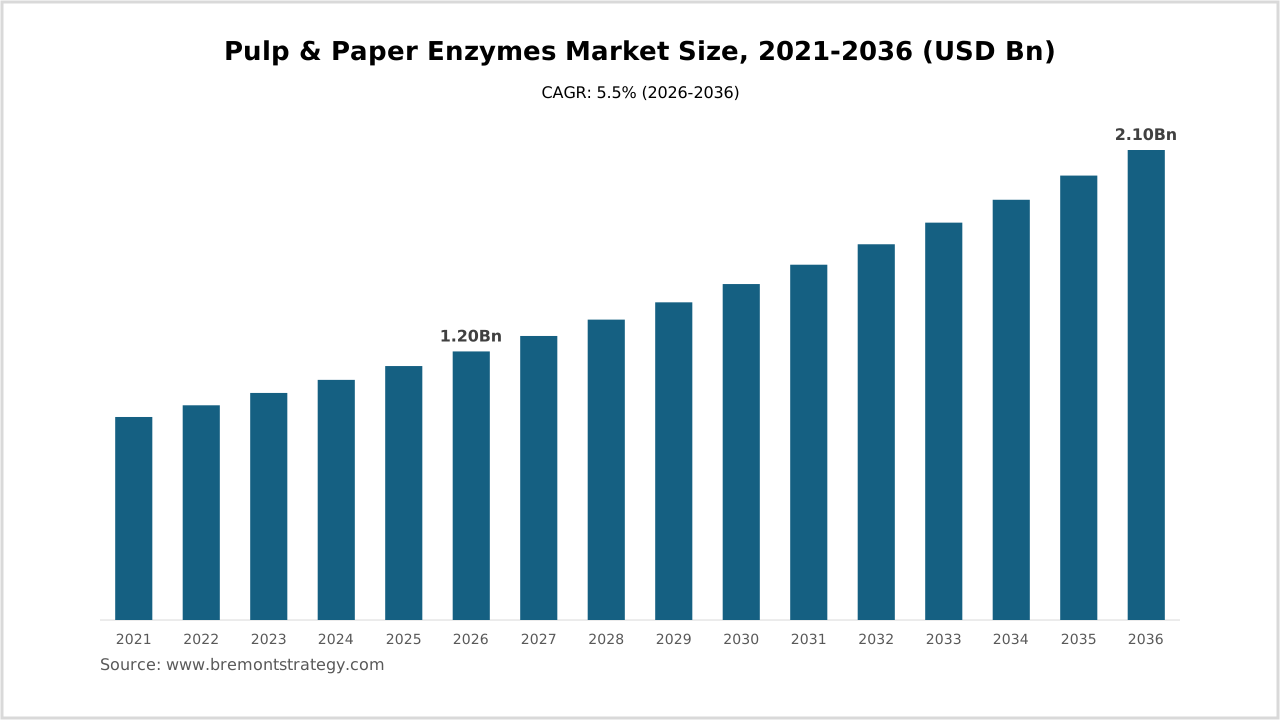
The Pulp & Paper Enzymes market was valued at $1.2 Billion in 2026 and is projected to reach $2.1 Billion by 2036, growing at a CAGR of 5.5% during the forecast period 2026-2036. This growth is driven by increasing demand for sustainable and efficient paper production processes.
Pulp & Paper Enzymes are specialized proteins that catalyze biochemical reactions, enhancing the efficiency of paper manufacturing processes. These enzymes offer a distinct advantage over conventional chemical methods by reducing energy consumption and improving product quality.
Overall demand is driven by the paper industry's shift towards eco-friendly production methods and the rising need for cost-effective solutions. The increasing regulatory pressure to minimize chemical usage in industrial processes further propels market growth.
Technological advancements in enzyme engineering are leading to the development of more robust and versatile enzymes. Research and development efforts are focused on enhancing enzyme stability and performance under diverse industrial conditions.
Competitive dynamics in the market are influenced by factors such as enzyme efficacy, cost-effectiveness, and the ability to provide comprehensive customer support. Adoption is largely driven by the proven benefits of enzymes in reducing operational costs and improving environmental compliance.
Pulp & Paper Enzymes Market Key Takeaways
- The Pulp & Paper Enzymes market is expected to grow from $1.2 Billion in 2026 to $2.1 Billion by 2036, at a CAGR of 5.5%.
- The Enzymes segment is projected to hold the largest market share, driven by its critical role in improving production efficiency.
- Asia Pacific is anticipated to be the fastest-growing region, owing to rapid industrialization and increasing paper production capacities.
- The Bleaching application segment is expected to witness significant growth, supported by the demand for high-quality paper products.
- Novozymes A/S
- BASF SE
- DuPont de Nemours, Inc.
- AB Enzymes GmbH
- Enzyme Development Corporation
- Advanced Enzyme Technologies Ltd.
- Dyadic International, Inc.
- Amano Enzyme Inc.
- Product Performance
- Technical Support
- Distribution Network
- Project References
- Pricing
Pulp & Paper Enzymes Market Key Drivers
| Drivers | Impact |
|---|---|
| Eco-Friendly Production | Increasing environmental regulations drive the adoption of enzymes over chemicals. |
| Cost Efficiency | Enzymes reduce energy and raw material costs, enhancing profitability. |
| Technological Advancements | Innovations in enzyme technology improve performance and application scope. |
| Rising Demand for Paper | Growth in e-commerce and packaging industries boosts paper production. |
Eco-Friendly Production
The shift towards sustainable manufacturing processes is a major driver for the Pulp & Paper Enzymes market. Enzymes offer a greener alternative to traditional chemicals, reducing the environmental footprint of paper production. This aligns with increasing regulatory pressures and consumer demand for eco-friendly products, prompting manufacturers to adopt enzyme-based solutions.
Cost Efficiency
Enzymes contribute to significant cost savings in paper manufacturing by reducing energy consumption and the need for expensive raw materials. Their ability to operate under milder conditions than conventional chemicals leads to lower production costs, making enzymes an attractive option for cost-conscious manufacturers.
Technological Advancements
Ongoing research and development in enzyme technology have led to the creation of more efficient and stable enzymes. These advancements expand the range of applications for enzymes in the pulp and paper industry, enhancing their effectiveness and broadening their adoption across various production processes.
Rising Demand for Paper
The global increase in paper consumption, driven by the growth of e-commerce and packaging industries, is boosting the demand for efficient production methods. Enzymes play a crucial role in meeting this demand by improving the quality and speed of paper production, making them indispensable in modern manufacturing.
Pulp & Paper Enzymes Market Opportunities and Challenges
| Opportunity | Challenges |
|---|---|
| Emerging Markets | High Initial Costs |
| Technological Innovations | Regulatory Compliance |
| Increased Sustainability Focus | Market Competition |
Emerging markets present significant opportunities for the Pulp & Paper Enzymes industry, as these regions are rapidly industrializing and increasing their paper production capacities. Technological innovations in enzyme formulations are opening new avenues for application, enhancing efficiency and reducing costs. Additionally, the global focus on sustainability is driving demand for eco-friendly manufacturing solutions, positioning enzymes as a key component in sustainable paper production.
However, the market faces challenges such as high initial costs associated with enzyme adoption, which can be a barrier for smaller manufacturers. Regulatory compliance remains a critical concern, as varying standards across regions can complicate market entry. Intense competition from established chemical processes and other enzyme manufacturers also poses a threat, necessitating continuous innovation and strategic positioning by companies.
Pulp & Paper Enzymes Market Report Scope
| Attributes | Details |
|---|---|
| Report Title | Pulp & Paper Enzymes Market Research Report 2036 |
| By component | Enzymes, Additives, Processing Aids, Catalysts, Stabilizers |
| By deployment | On-Site, Off-Site, Contract Manufacturing, In-House Production |
| By application | Bleaching, Deinking, Fibrillation, Biological Pulping, Wastewater Treatment |
| By industry | Pulp Mills, Paper Mills, Recycling Plants, Packaging Industry, Specialty Paper Production |
| By region | North America, Europe, Asia Pacific, Latin America, Middle East & Africa |
| Regions Covered | North America, Europe, Asia Pacific, Latin America, Middle East & Africa |
| Countries Covered | North America (United States, Canada), Europe (Germany, France, UK, Italy, Spain, Rest of Europe), Asia Pacific (China, India, Japan, South Korea, Australia, Rest of Asia Pacific), Latin America (Brazil, Mexico, Argentina, Rest of Latin America), Middle East & Africa (Saudi Arabia, UAE, South Africa, Rest of MEA) |
| Base Year | 2026 |
| Historic Data | 2021-2025 |
| Forecast Period | 2026-2036 |
| Number of Pages | 275 |
| Number of Tables & Figures | 350 |
| Customization Available | Yes, the report can be customized as per your need. |
Pulp & Paper Enzymes Market Segment Analysis
The Pulp & Paper Enzymes market is segmented into various categories, each playing a crucial role in the industry's growth. These segments include components, deployment methods, applications, industries, and regions, each with unique dynamics and growth patterns.
By component Analysis
| Segment | Market Share | Growth Rate | Key Insight |
|---|---|---|---|
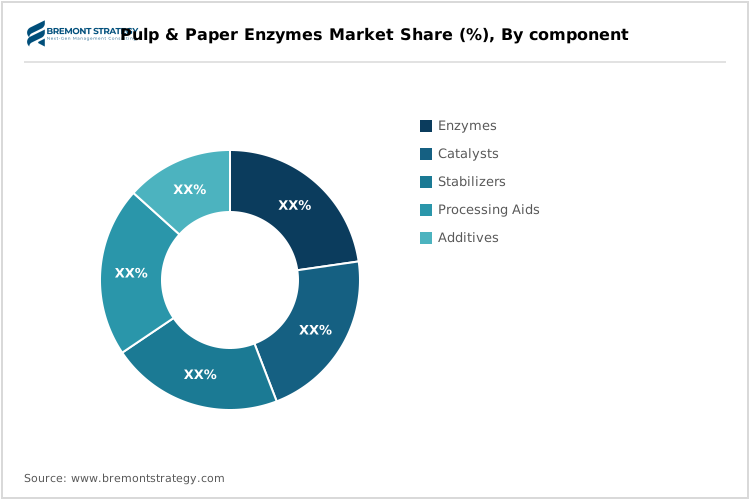
| Enzymes | 40% | 6.0% | Core to process efficiency |
| Additives | 25% | 5.2% | Enhance paper properties |
| Processing Aids | 15% | 5.0% | Support manufacturing |
| Catalysts | 12% | 4.8% | Accelerate reactions |
| Stabilizers | 8% | 4.5% | Maintain enzyme activity |
The Enzymes segment dominates the market due to its critical role in enhancing the efficiency and sustainability of paper production processes. These enzymes are essential for reducing energy consumption and improving product quality, making them indispensable in modern manufacturing.
Additives follow closely, offering significant benefits in improving the physical properties of paper products. These components are vital for manufacturers seeking to enhance the quality and performance of their offerings.
Processing Aids, Catalysts, and Stabilizers also contribute to the market, each playing a supportive role in optimizing manufacturing processes and maintaining the stability and efficacy of enzyme activity.
By deployment Analysis
| Segment | Market Share | Growth Rate | Key Insight |
|---|---|---|---|
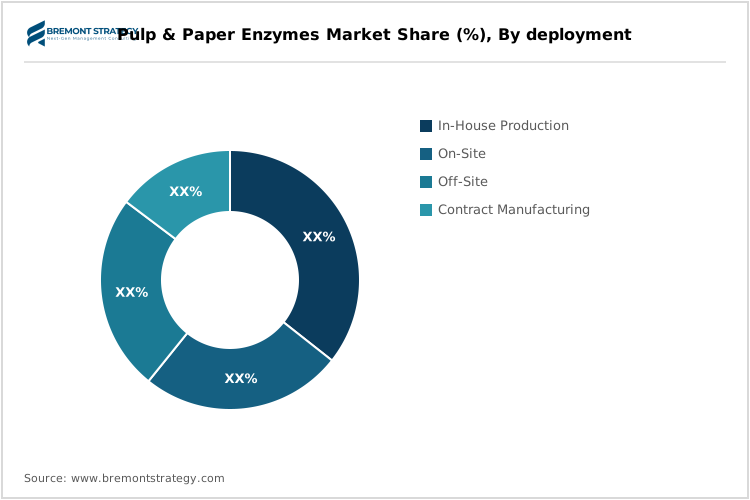
| On-Site | 35% | 5.8% | Immediate application benefits |
| Off-Site | 30% | 5.5% | Cost-effective for large volumes |
| Contract Manufacturing | 20% | 5.3% | Flexible production solutions |
| In-House Production | 15% | 5.0% | Control over quality |
On-Site deployment leads the market, offering immediate benefits in terms of application efficiency and customization to specific production needs. This method is preferred by manufacturers seeking rapid integration and optimization.
Off-Site deployment is also significant, providing cost advantages for large-scale operations where centralized production can lead to economies of scale. This approach is favored by companies with extensive production requirements.
Contract Manufacturing and In-House Production offer flexibility and control, respectively, catering to diverse business models and strategic priorities within the industry.
By application Analysis
| Segment | Market Share | Growth Rate | Key Insight |
|---|---|---|---|
| Bleaching | 30% | 6.2% | High demand for quality paper |
| Deinking | 25% | 5.7% | Recycling process efficiency |
| Fibrillation | 20% | 5.5% | Improves fiber bonding |
| Biological Pulping | 15% | 5.3% | Eco-friendly pulping method |
| Wastewater Treatment | 10% | 5.0% | Environmental compliance |
Bleaching is the leading application segment, driven by the demand for high-quality paper products that require superior whiteness and brightness. Enzymes play a crucial role in achieving these characteristics while minimizing environmental impact.
Deinking follows, essential for recycling processes where enzymes enhance the removal of ink from paper fibers, improving the quality and efficiency of recycled paper production.
Fibrillation and Biological Pulping are also important, offering benefits in fiber bonding and eco-friendly pulping methods, respectively. Wastewater Treatment, while smaller, is critical for environmental compliance and sustainable operations.
By industry Analysis
| Segment | Market Share | Growth Rate | Key Insight |
|---|---|---|---|
| Pulp Mills | 30% | 5.9% | Core enzyme applications |
| Paper Mills | 25% | 5.6% | Enhanced production efficiency |
| Recycling Plants | 20% | 5.4% | Critical for deinking processes |
| Packaging Industry | 15% | 5.2% | Growing demand for paper packaging |
| Specialty Paper Production | 10% | 5.0% | High-value applications |
Pulp Mills dominate the industry segment, as enzymes are integral to the core processes of pulp production, enhancing efficiency and sustainability. This segment benefits from the widespread adoption of enzyme technology to meet environmental standards.
Paper Mills also hold a significant share, leveraging enzymes to improve production efficiency and reduce costs. The focus on high-quality paper products drives enzyme usage in this segment.
Recycling Plants, Packaging Industry, and Specialty Paper Production each have unique demands for enzymes, driven by the need for efficient deinking, growing paper packaging demand, and high-value specialty applications, respectively.
By region Analysis
| Segment | Market Share | Growth Rate | Key Insight |
|---|---|---|---|
| North America | 25% | 5.2% | Mature market with stable growth |
| Europe | 20% | 5.0% | Strong environmental regulations |
| Asia Pacific | 35% | 6.5% | Rapid industrialization |
| Latin America | 10% | 5.3% | Emerging market potential |
| Middle East & Africa | 10% | 5.1% | Growing industrial base |
Asia Pacific leads the regional market with the highest growth rate, driven by rapid industrialization and increasing paper production capacities. The region's expanding manufacturing sector and rising demand for paper products fuel enzyme adoption.
North America, while a mature market, continues to experience stable growth due to the established presence of major paper manufacturers and ongoing advancements in enzyme technology.
Europe's market is characterized by strong environmental regulations that promote the use of eco-friendly enzyme solutions. This regulatory environment supports steady growth in enzyme adoption across the region.
Latin America presents emerging market potential, with increasing investments in paper production infrastructure and a growing focus on sustainable manufacturing practices driving enzyme demand.
The Middle East & Africa region is witnessing growth in its industrial base, with enzymes gaining traction as a means to enhance production efficiency and environmental compliance in the paper industry.
Pulp & Paper Enzymes Market Regional Outlook
| Regional Outlook | |
|---|---|
| Largest Market | Asia Pacific |
| Fastest Growing Market | Asia Pacific |
| Emerging Countries | India, Brazil, South Africa |
| Future Outlook | Continued growth driven by sustainability and efficiency needs. |
North America remains a key player in the Pulp & Paper Enzymes market, with established infrastructure and a focus on technological advancement. The region's demand is driven by the need for sustainable production methods and regulatory compliance, ensuring steady growth.
Europe's market is influenced by stringent environmental regulations that encourage the adoption of enzyme-based solutions. The region's commitment to sustainability and innovation supports ongoing market expansion, with a focus on reducing chemical usage in paper manufacturing.
Asia-Pacific is the largest and fastest-growing market, propelled by rapid industrialization and expanding paper production capacities. The region's dynamic manufacturing sector and rising demand for paper products drive enzyme adoption, making it a focal point for market growth.
Latin America offers significant growth potential, with increasing investments in paper production infrastructure and a focus on sustainable practices. The region's emerging market status presents opportunities for enzyme manufacturers to expand their presence and capitalize on growing demand.
The Middle East & Africa region is experiencing growth in its industrial base, with enzymes gaining traction as a means to enhance production efficiency and environmental compliance. The region's focus on industrial development and sustainability supports enzyme market expansion.
Pulp & Paper Enzymes Market Competitor Outlook
| Competitor Outlook | |
|---|---|
| Market Leader |
|
| Key Players |
|
| Key Competitive Factors |
|
Pulp & Paper Enzymes Pricing Analysis
Pricing in the Pulp & Paper Enzymes market is influenced by several factors, including formulation complexity, specification requirements, production scale, and regional market dynamics. Enzyme formulations with higher specificity and stability tend to command premium prices due to their enhanced performance and application versatility. Additionally, economies of scale in production can lead to cost advantages, while regional factors such as import duties and local competition can affect pricing strategies.
Price sensitivity varies among buyers, with larger manufacturers often prioritizing value-driven purchasing decisions over cost alone. These buyers focus on the long-term benefits of enzyme adoption, such as improved efficiency and reduced environmental impact, which can offset initial cost considerations. Smaller manufacturers, however, may exhibit higher price sensitivity, necessitating competitive pricing strategies from enzyme suppliers to capture this segment of the market.
Pulp & Paper Enzymes Consumer Buying Behaviour / Preference Analysis
Key Purchase Criteria
| Buying Factor | Relative Importance | Reason |
|---|---|---|
| Performance | Very High | Critical for process efficiency |
| Durability/Reliability | High | Ensures consistent results |
| Certification/Compliance | Medium-High | Regulatory adherence |
| Total Cost | Medium | Budget constraints |
| Differentiating Capability | High | Competitive advantage |
Typical buyers in the Pulp & Paper Enzymes market include procurement managers, production supervisors, and sustainability officers within paper manufacturing companies. These professionals are responsible for selecting materials and technologies that enhance production efficiency and align with environmental goals. Their purchase decisions are heavily influenced by the performance and reliability of enzyme products, as these factors directly impact operational success and compliance with industry standards.
Buyers prioritize performance and durability, seeking enzymes that deliver consistent results and withstand the rigors of industrial applications. Certification and compliance with regulatory standards are also important, ensuring that enzyme products meet necessary safety and environmental criteria. While total cost is a consideration, buyers are often willing to invest in higher-quality enzymes that offer long-term benefits, such as improved efficiency and reduced environmental impact, providing a competitive edge in the market.
TABLE OF CONTENTS
1. Research Methodology
2. Market Structure
3. Executive Summary
4. Pulp & Paper Enzymes Market Overview
- 4.1 Introduction
- Market Snapshot
- Assumptions, Inclusion & Exclusions
- Technological Advancements & Patent Analysis
- Case Studies
- Market Entry & Launch Strategies
- Macro-Economic Factors Impacting the Market Growth
- 4.2 Pulp & Paper Enzymes Market Dynamics
- Market Drivers
- Market Restraints
- Market Opportunity
- 4.3 Pulp & Paper Enzymes Market - Supply Chain Analysis
- Key Raw Material/Components Provider
- Key Manufacturers
- Key Distributors
- Key Consumers
- 4.4 Key Forces Shaping the Pulp & Paper Enzymes Market
- Bargaining Power of Suppliers
- Bargaining Power of Buyers
- Threat of Substitution
- Threat of New Entrants
- Competitive Rivalry
- 4.1 Introduction
5. Global Pulp & Paper Enzymes Market, By Component
- 5.1 Market Size, Value (USD Mn) & Volume (Units)
- Enzymes
- Additives
- Processing Aids
- Catalysts
- Stabilizers
- 5.2 Key Market Trends & Growth Opportunities
- 5.3 Market Share (%) Analysis, 2021-2036
- 5.4 Year-on-Year (YoY) Growth Rate
- 5.5 Market Attractiveness
- 5.6 Global Investment & Trade Risks
- 5.7 Pricing Analysis, 2021-2036
- 5.8 Operating Margin/Profits, 2021-2036
- 5.1 Market Size, Value (USD Mn) & Volume (Units)
6. Global Pulp & Paper Enzymes Market, By Deployment Mode
- 6.1 Market Size, Value (USD Mn) & Volume (Units)
- On-Site
- Off-Site
- Contract Manufacturing
- In-House Production
- 6.2 Key Market Trends & Growth Opportunities
- 6.3 Market Share (%) Analysis, 2021-2036
- 6.4 Year-on-Year (YoY) Growth Rate
- 6.5 Market Attractiveness
- 6.6 Global Investment & Trade Risks
- 6.7 Pricing Analysis, 2021-2036
- 6.8 Operating Margin/Profits, 2021-2036
- 6.1 Market Size, Value (USD Mn) & Volume (Units)
7. Global Pulp & Paper Enzymes Market, By Application
- 7.1 Market Size, Value (USD Mn) & Volume (Units)
- Bleaching
- Deinking
- Fibrillation
- Biological Pulping
- Wastewater Treatment
- 7.2 Key Market Trends & Growth Opportunities
- 7.3 Market Share (%) Analysis, 2021-2036
- 7.4 Year-on-Year (YoY) Growth Rate
- 7.5 Market Attractiveness
- 7.6 Global Investment & Trade Risks
- 7.7 Pricing Analysis, 2021-2036
- 7.8 Operating Margin/Profits, 2021-2036
- 7.1 Market Size, Value (USD Mn) & Volume (Units)
8. Global Pulp & Paper Enzymes Market, By Industry Vertical
- 8.1 Market Size, Value (USD Mn) & Volume (Units)
- Pulp Mills
- Paper Mills
- Recycling Plants
- Packaging Industry
- Specialty Paper Production
- 8.2 Key Market Trends & Growth Opportunities
- 8.3 Market Share (%) Analysis, 2021-2036
- 8.4 Year-on-Year (YoY) Growth Rate
- 8.5 Market Attractiveness
- 8.6 Global Investment & Trade Risks
- 8.7 Pricing Analysis, 2021-2036
- 8.8 Operating Margin/Profits, 2021-2036
- 8.1 Market Size, Value (USD Mn) & Volume (Units)
9. Global Pulp & Paper Enzymes Market, By Region
- 9.1 Market Size, Value (USD Mn) & Volume (Units)
- North America
- Europe
- Asia Pacific
- Latin America
- Middle East & Africa
- 9.2 Key Market Trends & Growth Opportunities
- 9.3 Market Share (%) Analysis, 2021-2036
- 9.4 Year-on-Year (YoY) Growth Rate
- 9.5 Market Attractiveness
- 9.6 Global Investment & Trade Risks
- 9.7 Pricing Analysis, 2021-2036
- 9.8 Operating Margin/Profits, 2021-2036
- 9.1 Market Size, Value (USD Mn) & Volume (Units)
10. Global Pulp & Paper Enzymes Market, By North America
- 10.1 Market Size, Value (USD Mn) & Volume (Units)
- US
- Canada
- 10.2 Key Market Trends & Growth Opportunities
- 10.3 Market Share (%) Analysis, 2021-2036
- 10.4 Year-on-Year (YoY) Growth Rate
- 10.5 Market Attractiveness
- 10.6 Global Investment & Trade Risks
- 10.7 Pricing Analysis, 2021-2036
- 10.8 Operating Margin/Profits, 2021-2036
- 10.1 Market Size, Value (USD Mn) & Volume (Units)
11. Global Pulp & Paper Enzymes Market, By Europe
- 11.1 Market Size, Value (USD Mn) & Volume (Units)
- Germany
- France
- UK
- Spain
- Italy
- Switzerland
- Russia
- Poland
- Rest of Europe
- 11.2 Key Market Trends & Growth Opportunities
- 11.3 Market Share (%) Analysis, 2021-2036
- 11.4 Year-on-Year (YoY) Growth Rate
- 11.5 Market Attractiveness
- 11.6 Global Investment & Trade Risks
- 11.7 Pricing Analysis, 2021-2036
- 11.8 Operating Margin/Profits, 2021-2036
- 11.1 Market Size, Value (USD Mn) & Volume (Units)
12. Global Pulp & Paper Enzymes Market, By Asia Pacific
- 12.1 Market Size, Value (USD Mn) & Volume (Units)
- China
- Japan
- South Korea
- India
- Australia
- South East Asia
- Rest of APAC
- 12.2 Key Market Trends & Growth Opportunities
- 12.3 Market Share (%) Analysis, 2021-2036
- 12.4 Year-on-Year (YoY) Growth Rate
- 12.5 Market Attractiveness
- 12.6 Global Investment & Trade Risks
- 12.7 Pricing Analysis, 2021-2036
- 12.8 Operating Margin/Profits, 2021-2036
- 12.1 Market Size, Value (USD Mn) & Volume (Units)
13. Global Pulp & Paper Enzymes Market, By Latin America
- 13.1 Market Size, Value (USD Mn) & Volume (Units)
- Brazil
- Mexico
- Argentina
- Rest of LATAM
- 13.2 Key Market Trends & Growth Opportunities
- 13.3 Market Share (%) Analysis, 2021-2036
- 13.4 Year-on-Year (YoY) Growth Rate
- 13.5 Market Attractiveness
- 13.6 Global Investment & Trade Risks
- 13.7 Pricing Analysis, 2021-2036
- 13.8 Operating Margin/Profits, 2021-2036
- 13.1 Market Size, Value (USD Mn) & Volume (Units)
14. Global Pulp & Paper Enzymes Market, By Middle East & Africa
- 14.1 Market Size, Value (USD Mn) & Volume (Units)
- Saudi Arabia
- UAE
- South Africa
- Rest of MEA
- 14.2 Key Market Trends & Growth Opportunities
- 14.3 Market Share (%) Analysis, 2021-2036
- 14.4 Year-on-Year (YoY) Growth Rate
- 14.5 Market Attractiveness
- 14.6 Global Investment & Trade Risks
- 14.7 Pricing Analysis, 2021-2036
- 14.8 Operating Margin/Profits, 2021-2036
- 14.1 Market Size, Value (USD Mn) & Volume (Units)
15. Competitive Analysis
- 15.1 Competition Landscape, Key Players
- Global Market Share (%) Analysis of Key Players in Pulp & Paper Enzymes, in Value (USD Mn) & Volume (Units)
- Company Overview
- Company Financials
- News & Developments
- Strategic Initiatives
- 15.2 Company Profiles
- Novozymes A/S
- BASF SE
- DuPont de Nemours, Inc.
- AB Enzymes GmbH
- Enzyme Development Corporation
- Advanced Enzyme Technologies Ltd.
- Dyadic International, Inc.
- Amano Enzyme Inc.
- Chr. Hansen Holding A/S
- Royal DSM N.V.
- Kerry Group plc
- Megazyme Ltd.
- Biocatalysts Ltd.
- Specialty Enzymes & Biotechnologies Co.
- Enzyme Solutions Pty Ltd.
- Jiangsu Boli Bioproducts Co., Ltd.
- Shandong Longda Bio-Products Co., Ltd.
- Sunson Industry Group Co., Ltd.
- Maps Enzymes Ltd.
- Creative Enzymes
- 15.1 Competition Landscape, Key Players
METHODOLOGY
To provide you with a comprehensive understanding of how we quantify your market opportunity, we utilize a multi-phased methodology designed to minimize risk and maximize strategic clarity. We begin the process by establishing a clear conceptual framework, often referred to as the TAM-SAM-SOM model. By starting with the Total Addressable Market, we look at the absolute global demand for your category. We then refine this into the Serviceable Addressable Market to account for your specific geographic and technological reach, and finally, we pinpoint the Serviceable Obtainable Market. This ensures that the final figures we present are not just theoretical "vanity metrics," but represent a realistic, capture-able revenue target for your business.
Our data collection process relies on a rigorous principle called triangulation, where we cross-reference multiple independent data streams to ensure accuracy. We initiate this with deep-dive secondary research, synthesizing high-value intelligence from audited financial filings, government trade databases, and specialized industry journals. This "desk research" phase provides a macro-economic baseline and identifies historical growth trajectories. However, because secondary data can sometimes lag behind real-time shifts, we supplement this with targeted primary research. This involves direct engagement with Key Opinion Leaders (KOLs) and structured quantitative surveys to capture the current pulse of the market and emerging buyer intent.
To ensure the integrity of our estimates, we employ a dual-modeling approach, calculating the market size from both the "Top-Down" and "Bottom-Up." The Top-Down analysis provides a valuable sanity check against broader economic trends, but we place the most weight on our Bottom-Up modeling. By taking granular data, such as the average transaction value and the actual number of potential customer touchpoints, and scaling them upward, we build a highly defensible model grounded in operational reality. This dual-verification method allows us to identify any discrepancies early, ensuring that the resulting data is robust enough to withstand the scrutiny of stakeholders or investors.
Finally, we recognize that a static market size figure is only a snapshot in time. To provide you with a roadmap for the future, we integrate trend analysis and Compound Annual Growth Rate (CAGR) forecasting into our final reporting. We analyze the underlying drivers, such as regulatory shifts, technological disruptions, or changing consumer behaviors, to predict how the market will evolve over the next three to five years. This ongoing tracking mechanism transforms a simple number into a dynamic strategic tool, allowing you to monitor your market share in real-time and pivot your resources as new opportunities emerge.
Frequently Asked Questions
What is the current size of the Pulp & Paper Enzymes market?
The base year for the Pulp & Paper Enzymes market is 2026, with a market size of $1.2 billion.
What is the projected market size by 2036?
By 2036, the Pulp & Paper Enzymes market is projected to reach a size of $2.1 billion.
What is the market's CAGR during the forecast period?
The Pulp & Paper Enzymes market is expected to grow at a compound annual growth rate (CAGR) of 5.5% from 2026 to 2036.
Which region leads or is the fastest-growing in this market?
The Asia-Pacific region is anticipated to be the fastest-growing market for Pulp & Paper Enzymes, driven by increasing demand in emerging economies.
Which segment holds the largest share in the market?
The bleaching segment holds the largest share in the Pulp & Paper Enzymes market due to its widespread application in improving paper quality and reducing chemical usage.
Who are the key players in this market?
Key players in the Pulp & Paper Enzymes market include Novozymes, BASF SE, and DuPont, among others.
What are the key growth drivers for this market?
The market growth is primarily driven by the increasing demand for sustainable and eco-friendly paper products, along with advancements in enzyme technology.
Is the report customizable?
Yes, the report can be customized as per specific requirements to better meet the needs of clients.